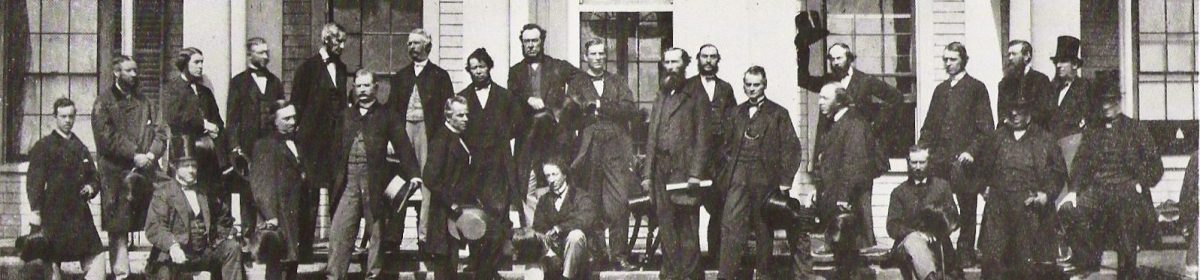
We are sometimes told that laws are “ordinances of reason made for the common good”, or some such pieties about “the dignity of legislation”. But just as the best argument against democracy is not a book by De Maistre or Dineen but, famously, a five-minute conversation with an average voter, so too the best argument against legislation is not anything written by Hayek or Leoni, but the work product of an average legislature. The Canadian Parliament, say. A friend has alerted me to an example provided by Bill C-64, the future Pharmacare Act, which is currently awaiting third reading in the Senate.
For what is supposed to be a major new social programme, the bill is short ― just 11 clauses, none of them very long. Indeed, the long-winded preamble takes up more than a quarter of the total number of words the bill contains. But its drafters still managed to make its central provisions incoherent and indeed to mess it up to the point where, correctly interpreted, it will fail to provide help for many if not most of the people it is supposed to support.
The bill is so short because it does very little: it operates almost entirely by empowering a minister to make spending commitments to provincial and Aboriginal governments. After a very short definitions section ― too short, as will presently be apparent ― and some statements of purpose and general principle, the bill gets to its central part, simply entitled “Funding”. And that’s where the problems are.
The first provision in that part is clause 5, “Funding Commitment”. It reads:
The Government of Canada commits to maintaining long-term funding for the provinces, territories and Indigenous peoples to improve the accessibility and affordability of pharmaceutical products, beginning with those for rare diseases. The funding for provinces and territories must be provided primarily through agreements with their respective governments.
This is messaging more than substance, but message, as we are about to see, is muddle. Clause 6, though, is the really important one. Subclause 6(1) is called “Payments” and reads:
The Minister must, if the Minister has entered into an agreement with a province or territory to do so, make payments to the province or territory in order to increase any existing public pharmacare coverage — and to provide universal, single-payer, first-dollar coverage — for specific prescription drugs and related products intended for contraception or the treatment of diabetes.
Subclauses 6(2) and 6(3) are not important, so I omit them here. There are two issues in the provisions I have cited.
The less important one is the rather obvious inconsistency between cl 5 and subcl 6(1). Diabetes is not, alas, a “rare disease”: the government’s own explainer on this aspect of the legislation points out that it “is one of the most common chronic diseases affecting people living in Canada”. Pregnancy, I should have thought, is not a “disease” at all. So the pharmacare bill starts by stating the government’s intention to do one thing and then actually does something else entirely, the opposite even. Nothing of legal consequence turns on this, I think, because cl 5 is not actually doing anything. It’s just puffery. But by my lights this incoherence is neither reasoned nor dignified, and so worth drawing the readers’ attention to.
The other issue, however, is rather more consequential. It concerns the use of the phrase “prescription drugs and related products” in subcl 6(1), and indeed throughout the bill. The trouble is that most diabetes medications and some contraceptives are neither prescription drugs ― being available, you guessed it, without a prescription ― nor, you would think, “related products”. They’re drugs ― but non-prescription ones. Senator Jim Quinn raised this point, and its devastating consequences, in Question Period arguing that :
Bill C-64 contains a critical drafting error where the government does not have the legal authority to spend money on emergency contraceptives and insulin. Under the principles of statutory interpretation, by using the term “prescription drug” rather than “drug,” the bill is excluding non-prescription drugs, which, by definition, do not require a prescription. These drugs cannot be classified as a related product, as that has a specific technical meaning of a device or supply.
The government’s response is that it “does not share [this] interpretation” and will not support an amendment to address it. Why doesn’t the government read the clause as Senator Quinn does? The Question Period answer doesn’t make this clear, but apparently they think they can stuff non-prescription drugs into the “related product” category.
This is not persuasive though. For one thing, the good old maxim expressio unius est exclusio alterius suggests that, when a statute refers to one type of drug (prescription), but not another (non-prescription), that other type of drug is not included in its scope. Another way of saying much the same thing is that if one type of drug is referred to as a drug, then another type should also be referred to as a drug, and not as something else like a “related product”. Yet another way of seeing the problem is that, if “related products” are drugs, there is no point in a bill speaking (repeatedly, too, not just in cl 6(1)) of “prescription drugs and related products”. The reference to drugs would be surplusage, which Parliament is presumed not to deal in.
To my mind, these are the essential points, but there is also the additional one to which Mr. Quinn adverts: in the (legal) drug world, “related product” has a known specific meaning. For instance, the report of an advisory panel about what a pharmacare programme might look like, explains that “[r]elated products are typically devices that directly support the delivery or administration of and/or are necessary for the optimal use of drugs”. I suppose one might claim that “typically” allows for exceptions, but… come on. This is a case where the technical definition meshes with what one would inuit from a straightforward reading of the provision: drugs are one thing, and then there are products related to drugs, the technical definition helping explain the nature of the relationship, which are not themselves drugs.
Were cl 6(1) (and the rest of the bill, which uses the same phrasing) enacted in their current terms, and were the courts to be called upon to interpret it, and, further, were they to apply the normal interpretive rules I have outlined, the effectiveness of the pharmacare programme would be greatly undermined. (I make no comment on its effectiveness, let alone desirability, even if it worked as intended.) That is, admittedly a good deal of speculation. It’s not obvious to me that anyone would have standing to challenge the government’s spending under cl 6(1), for instance. Of course, courts are sometimes very liberal indeed with public interest standing, but I wouldn’t exactly be shocked if they suddenly discovered limits to their liberality in a case that promises to gut a progressive social programme. Alternatively, I wouldn’t exactly be shocked if the courts were to engage in some interpretive jiggery-pokery and agree with the government’s reading of cl 6(1).
Of course none of that would be necessary if, as Senator Quinn suggested, the government supported an amendment to the Pharmacare Bill to clarify just what it means. Add another term to the definitions section or reword the “prescription drugs” bit, and voilà! But, to come back to the point with which I started, suggesting such obvious fixes is presuming that the enactment of legislation is a process governed by reasoned deliberation for the public good, or at least for what some reasonable people plausibly imagine the public good to be. Reality is different. Given the present political situation, it is surely fair to assume that the government is desperate to avoid the bill going back to the House of Commons ― even to accept simple amendments that, far from undermining it in any way, would guarantee that it works as intended (if not as advertised in cl 5). And so it will blather and bluster and demand that “this bill, this important, historic framework bill, should be passed with dispatch and without amendment”.
Although it is possible to pick out occasional exceptions, legislation is ordinarily gory sausage-making, all blood and guts. And sometimes, the resulting sausage is barely fit for human consumption ― and yet it will be vigorously defended by people who know better but are full of passionate intensity for the sake of their patriotism, or a handful of votes in a swing riding. Like most other things you need to know about government, it’s all in Yes, Minister:
Perhaps Leoni and Hayek are no more your thing than salami and bratwurst. But while no foreign bureaucrat can stop you eating British or, as the case may be, Canadian sausage, people more intellectually rigorous than the Rt Hon James Hacker MP and Sir Humphrey Appleby shouldn’t pretend to be starry-eyed about the ways in which it is made, or its effects on human health.


 Double Aspect
Leave a reply to The Bigger Picture – Double Aspect Cancel reply