Apologies for the recent silence. There was no particularly good reason for it, either. Anyway, I’m back.
And there is a very good reason for that: the Québec Court of Appeal has released its opinion in response to a reference by the Québec government on the constitutionality of the Federal Government’s Senate reform plans, which involve the limitation of Senators’ terms to 9 years and, more importantly, the setting up of provincial elections the appointment of the winners of which a Prime Minister would be obliged to “consider” recommending to the Governor General. In Reference re Bill C-7 Concerning the Reform of the Senate, 2013 QCCA 1807 (the French opinion is here; English translation here), the Québec Court of Appeal holds that this project is unconstitutional if undertaken unilaterally by Parliament; it can only be implemented as a constitutional appointment pursuant to par. 42(1)(b) of the Constitution Act, 1982.
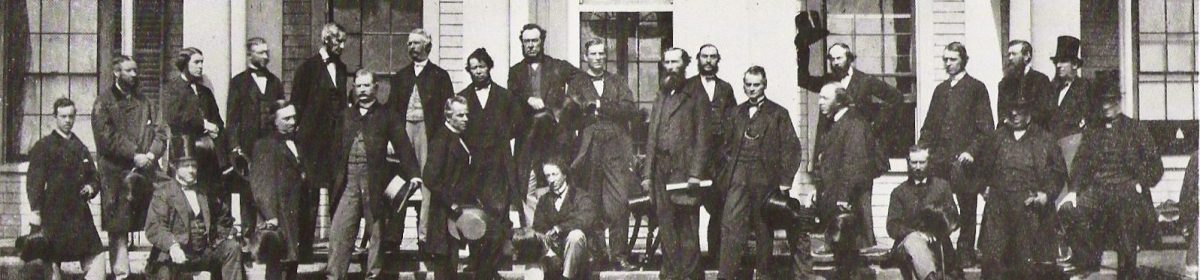
The Court starts off by explaining the importance of the Senate to the Fathers of Confederation. The constitution of Canada was meant to be, as the Preamble put it, “similar in principle to that of the United Kingdom,” and that meant, among other things, having an unelected Upper House of the legislature. The province of Canada had, in fact, experimented with an elected Upper House ― and Sir John A. Macdonald had not liked the experience. The appointed, undemocratic Senate was an essential part of the bargain struck in 1867. To this day, “it seems that the Senate and its members play a significant role in federal political life, and that the institution is not simply a mirror of the House of Commons” (par. 12). The Supreme Court has confirmed the Senate’s position as an entrenched, central part of the compromise that made Confederation possible, in Re: Authority of Parliament in relation to the Upper House, [1980] 1 SCR 54.
So much for the context. The relevant constitutional text consists of, on the one hand, par. 42(1)(b) and, on the other, s. 44 of the Constitution Act, 1982. The former provides that an amendment according to what is usually referred to as the 7/50 procedure, requiring the consent of 7 provinces representing between them at least half of the Canada’s population, is necessary to effect “[a]n amendment to the Constitution of Canada in relation to” any of a number of “matters,” among which are “the powers of the Senate and the method of selecting Senators.” As for s. 44, it provides that “[s]ubject to sections 41 and 42, Parliament may exclusively make laws amending the Constitution of Canada in relation to the executive government of Canada or the Senate and House of Commons.” Also relevant are s. 24 of the Constitution Act, 1867, which provides that Senators are “summon[ed]” by the Governor General, and par. 41(a) of the Constitution Act, 1982, which requires the unanimous consent of the provinces to amendments “in relation to … the office of the … Governor General.” Québec argued that the proposed Senate reform came within the terms of par. 42(1)(b) as affecting “the method of selecting Senators” and/or par. 41(a) as affecting the office of the Governor General. The Court accepted the former claim, and rejected the latter.
S. 42, it said, should not be interpreted restrictively, as an exception to a more general principle contained in s. 44. These provisions are of equal importance. Amendments relating with the “internal management” of the Senate fall under s. 44; those that have to do with the Senate’s “role[s] within the federal legislative structure, in particular those of ensuring provincial and regional representation and examining bills with sober second thought,” under s. 42 (par. 34).
Crucially, Parliament cannot get around the entrenchment of s. 42 by legislating so as to leave in place the formal provisions of the Constitution while changing the way it operates in practice. For one thing, this would contradict “the principle of supremacy of the Constitution” (par. 43). For another, it would subvert the compromise that made possible the Patriation of the 1981/82, which, so far as the Senate was concerned, had consisted in kicking the can down the road, and postponing any amendments ― to be effected at some later date pursuant to the new amending formula. Finally, s. 42 must be interpreted in light not only of the legal formalities, but also of the political realities of the constitution:
section 42 cannot be read as reflecting a consensus between the federal and provincial governments in 1982 to preserve the formalism but not the reality with respect to the matters set out therein, including the method of selecting senators. … [W]hat interest would the provinces have had when the Constitution Act, 1982 was adopted to protect a juridical reality that, even then, was inconsistent with political reality?
The political reality is that “the method of selecting Senators,” as it existed in 1982, included no electoral process. “The method of selecting Senators” refers not only to their final appointment by the Governor General, but to the entire process leading to that appointment. That process would be modified by the federal government’s reform project. Therefore that project requires a constitutional amendment.
That amendment need not be unanimously supported by the provinces, however, because it does not affect “the office of the Governor General”. While the Governor General is responsible for the final appointment of the Senators as a matter of law, “[i]n reality, the appointment of senators became the exclusive prerogative of the Prime Minister who was then in office whenever a vacancy occurred” (par. 55). The federal government’s reform project would have affected not the Governor General’s (purely formal) role in the process, but the Prime Minister’s. And “to assimilate an amendment of the powers of the Prime Minister with those of the Governor General for the purposes of paragraph 41(a) of the Constitution Act, 1982 would limit Parliament’s powers because of a constitutional convention. Such a limitation does not exist, or at a minimum, does not concern the courts” (par. 58). Conventions exist in a separate, non-justiciable realm. They can be modified by the behaviour of political actors; therefore, a fortiori, they can be modified by statute, without the need for a constitutional amendment.
If this all sounds familiar, it might be because you’ve read Fabien Gélinas’s and my paper on “Constitutional Conventions and Senate Reform,” in which we argued that the amending formula of the Constitution Act, 1982, must be understood in light of the constitutional conventions which determine the practical operation of the constitution. This means, on the one hand, that the “method of selecting Senators” means discretionary decision-making by the Prime Minister and no electoral process, and on the other, that “the office of the Governor General” does not in fact include the power to choose Senators. As a result, the federal government’s reform project comes within the scope of par. 42(1)(b), but not 41(a).
I am very happy with this opinion. I hope that the Supreme Court, which is set to hear the arguments on the federal government’s own Senate reform reference in a few weeks, comes to similar conclusions (and perhaps even spares a few words for us)!


 Double Aspect
Leave a reply to Leonid Sirota Cancel reply