-
Putting Stare Decisis Together Again
Originalists and living constitutionalists alike have good Rule of Law reasons for being wary of appeals to reinvigorate stare decisis
-
Mere Liberalism
A response to a common caricature of liberal beliefs
-
The Top Statutory Interpretation Cases of 2020
A banner year for interpretation
-
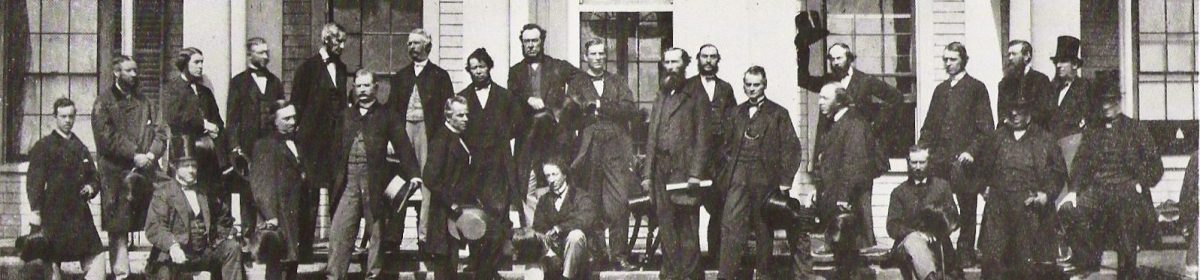
Would That I Could Love You
My mixed feelings about Sir John A. Macdonald
-
Still Wrong, Just a Little Less So
The Québec Court of Appeal errs in thinking the Charter prevents the imposition of, in effect, life imprisonment without parole
-
An Oddity in Strom
In October, the Saskatchewan Court of Appeal released its much-anticipated decision in Strom. Strom raised a number of important issues: “ “at the intersection between professional regulation, Ms. Strom’s private life, and the s.2(b) Charter guarantee of freedom of expression in the age of social media.” Strom was a registered nurse. Her grandfather tragically…
-
Constitutional Law Ruins Everything. A (sort of) response to Mancini’s “Neutrality in Legal Interpretation.”
This post is by Andrew Bernstein. No! I am not an academic nor was meant to be.Am a mere practitioner, one that will doTo settle a dispute, argue an appeal or twoWhen advising clients, the law’s my tool.Deferential, if it helps me sway the courtArgumentative, and (aspirationally) meticulous.Case-building is my professional sportTrying my hand at…
-
Guest Post: Andrew Bernstein
We continue our week of guest posts. This time, we will be posting a contribution from Andrew Bernstein (Tory’s), in response to my post last week on the ideal of neutrality in legal interpretation.
-
Declarations of Unconstitutionality as Judgments In Rem: A Response to Professor Daly
This post is written by Marc-Antoine Gervais, and a larger paper on the subject will appear in the McGill Law Journal (vol. 66). Canada’s model of judicial review of legislation is unusual. On the one hand, it is “diffuse” in that all courts of law (and many administrative tribunals) may decide constitutional questions. On the…
-
Guest Post: Marc-Antoine Gervais
It is my pleasure to announce a guest post today by Marc-Antoine Gervais, on the subject of declarations of invalidity as in rem judgments. The post is a response to Paul Daly’s recent post on declarations of invalidity in the aftermath of the Sullivan decision. Marc-Antoine has a larger paper coming out in the McGill…
 Double Aspect